Land-Owned Manufactured Homes in the East Valley, AZ
The Straight-Talk Guide
This guide is the plain-English primer on land-owned manufactured homes in Mesa and the East Valley. Realtor.com currently shows nearly 1,000 manufactured and mobile home listings in Mesa alone, which makes this a huge, growing part of our market, not a corner case. I've spent 19 years selling real estate here, and I've personally marketed a substantial owned-land manufactured home in Mesa, so I know exactly which questions trip up buyers and sellers. This page answers them all, one by one, in plain language and zero drama.
By Tricia Manara, Broker · Manara Properties LLC · License BR567772000 · Last updated:
- Years in Real Estate
- 19
- Manufactured Listings in Mesa Today
- ~1,000
- Homes Sold YTD
- 45
- Drama at Closing
- 0
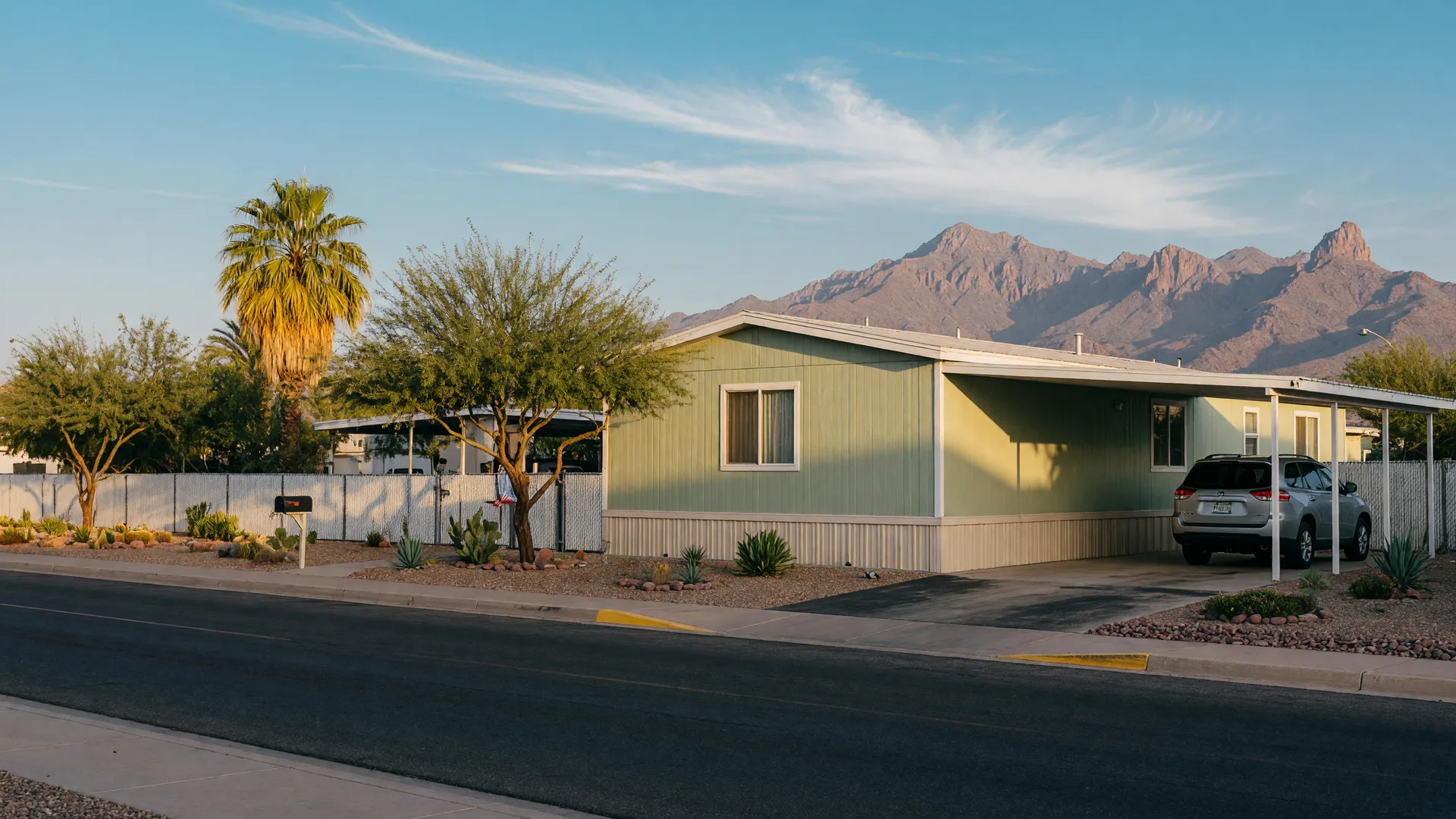
What is a land-owned manufactured home, and is it worth buying in the East Valley? A land-owned manufactured home is a factory-built home that sits on land the owner actually owns, titled as real property at the county, the same way a house is. That one detail changes everything: it unlocks real-property mortgages, standard homeowners insurance, and the strongest resale in the category. Right now Realtor.com shows nearly 1,000 manufactured and mobile home listings in Mesa alone, and the East Valley has one of the healthiest manufactured-home markets in Arizona. Buying and selling them well comes down to understanding a few key distinctions, which is exactly what this guide walks through.
In this guide
- 01 Land-Owned vs. Leased Land
- 02 55+ vs. Non-Age-Restricted Communities
- 03 Affixed vs. Non-Affixed Homes
- 04 The 1976 HUD Code
- 05 Financing Differences
- 06 HOAs and Community Rules
- 07 Park and Space Fees
- 08 Title Issues
- 09 Insurance Differences
- 10 Inspection Considerations
- 11 Resale Value and What Holds Value
- 12 Real Property vs. Personal Property
Land-Owned vs. Leased Land: Why Owning the Dirt Is Everything.
This is the single most important distinction in the whole category. A land-owned manufactured home comes with the land it sits on. The home and the lot are titled together as real property at the county, just like a site-built house. A leased-land manufactured home means you own the home itself, but you rent the lot from a park or community owner, usually month to month.
That one difference cascades through everything else on this page: how you finance it, how you insure it, how you title it, and how well it holds its value. When you own the land, the home stops acting like a depreciating vehicle and starts acting like an appreciating asset, because land in the East Valley appreciates.
Why it matters to buyers & sellers
Buyers: land ownership is what makes the home financeable as real estate and insurable like a house, and it's the main reason your investment can grow. Sellers: owned land is your headline selling point. In the East Valley, the dirt is the appreciating asset, and it's the biggest driver of your resale value.
55+ vs. Non-Age-Restricted Communities?
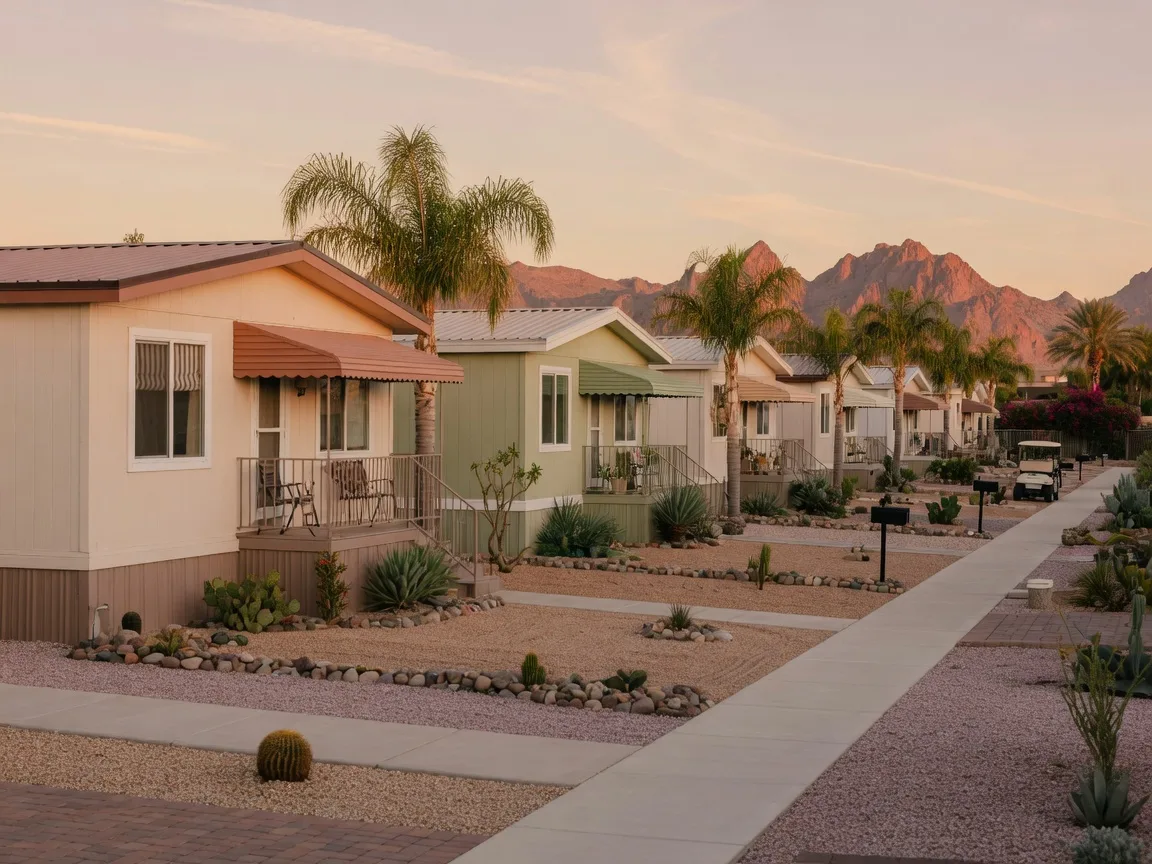
A 55+ community is allowed to require that at least one resident of each home be 55 or older, under the federal Housing for Older Persons Act. Many of these communities are built around that lifestyle: quieter streets, organized activities, low-maintenance living, often with a clubhouse and pool. A non-age-restricted community is open to buyers of any age, which usually means families, young couples, and a wider resale pool.
Neither is better, they're different products for different phases of life. The mistake buyers make is assuming every manufactured-home community is age-restricted, or ignoring the rule until it bites them in the purchase contract.
Why it matters to buyers & sellers
Buyers: make sure you and everyone in your household actually qualify for the community's rules before you make an offer, and know what amenities you're paying for. Sellers: your buyer pool is defined by the community's age rules, so price and marketing have to match who is legally allowed to buy there.
I've seen buyers assume a 55+ community is a great deal until they realize they don't meet the age requirement. And I've seen sellers in an all-ages community wonder why they're getting fewer lookers, when the answer is that their property is simply in a different lane. Reading the community's governing documents before anything else saves everyone time.
The good news for the East Valley: we have both kinds in abundance, so the right fit almost always exists nearby. It just has to be the right fit, on paper, not just in your head.
Affixed vs. Non-Affixed Homes: When a Home Becomes Real Property.
"Affixed" means the home has been permanently attached to the land it sits on. In practical terms that usually means it's set on a permanent foundation, the wheels and axles are removed, and the utilities are permanently connected. Once a manufactured home is properly affixed to land the owner holds, it can be treated as real property, the same legal category as a house you buy with a mortgage.
A non-affixed home is still essentially a movable structure, sitting on blocks or tied down, with its wheels or the ability to move still part of its character. Legally it's personal property, closer to a vehicle or a boat than to real estate. You can own the land under a non-affixed home and still have a mess of title and financing complications, because the home and the land can be classified differently.
Why it matters to buyers & sellers
Buyers: an affixed, land-owned home is the version that finances like a house, insures like a house, and resells like a house. Sellers: if your home is affixed and titled as real property, that's a feature to lead with, because it's what separates you from the personal-property crowd in the minds of buyers and lenders.
The 1976 HUD Code and What It Means for Financing and Resale.
In 1974 Congress passed the National Manufactured Housing Construction and Safety Standards Act, and the resulting federal HUD Code took effect on June 15, 1976. From that date forward, factory-built homes had to be constructed to a single national safety and quality standard. Homes built under the HUD Code are called manufactured homes. Homes built before it are the old "mobile homes," and they're a completely different animal.
The date matters more than almost anything else on your checklist. A HUD Code home can be financed, insured, and sold like real estate when it's affixed to owned land. A pre-1976 home is extremely difficult to finance and insure, and most lenders and insurers won't touch it at all. When you see a cheap mobile home that seems too good to be true, the pre-1976 date is usually why.
Why it matters to buyers & sellers
Buyers: confirm the home is HUD Code (built after June 1976) before you get emotionally attached, because that single fact decides whether you can finance and insure it. Sellers: a clean HUD certification, with the label and data plate intact, is part of your proof stack. It's what tells a lender this is a home, not a liability.
Every HUD Code home carries two identifiers: a red certification label on the exterior and a data plate, usually inside a kitchen cabinet or near the electrical panel, that records the builder, the date, and the plant. When I market a land-owned manufactured home, verifying that paperwork early is one of the first things I do, because it's the key that unlocks the financing door for the buyer.
Financing Differences: Real Property Mortgage vs. Personal Property Loan.
This is where the land-owned, affixed home really separates from the pack. When a manufactured home is affixed to owned land and titled as real property, it can be financed with a conventional mortgage, FHA, or VA loan, just like a site-built house. You get mainstream rates, 15 to 30 year terms, and down payments you already understand.
A home treated as personal property can't get a standard mortgage. It's financed with what's called a chattel loan, a personal property loan. Chattel loans typically carry higher interest rates, shorter terms, and larger down payments, because the lender's collateral is a depreciating movable asset instead of land. Over the life of the loan, that difference can add up to tens of thousands of dollars.
Why it matters to buyers & sellers
Buyers: land ownership and proper affixing can be the difference between a mortgage payment and a much more expensive chattel payment, so never assume you're stuck with the expensive option until a lender confirms the home's status. Sellers: marketing a home that can be bought with a real mortgage widens your buyer pool to every financed buyer, not just cash buyers.
HOAs and Community Rules: Read Them Before You Love the House.
Here's the thing people don't expect: a land-owned manufactured home can absolutely come with an HOA. Many East Valley manufactured-home communities are run by a homeowners association that sets rules about exterior appearance, landscaping, parking, pets, and who can live there. The dues pay for common areas, community amenities, and shared infrastructure, and they're a normal part of the picture, not a red flag.
What matters is that you read the covenants, conditions, and restrictions before you commit, not after. Some communities are relaxed, some are strict about what color you can paint, and some have rental restrictions that matter if you're an investor. The rules shape both your day-to-day life and your ability to resell, so they deserve the same attention as the home itself.
Why it matters to buyers & sellers
Buyers: an HOA keeps the neighborhood looking good, which protects your value, but only if you can live with the rules. Sellers: know your HOA's current dues, rules, and any pending assessments, because a buyer's lender and title company will ask, and surprises here can stall a closing.
Park and Space Fees: The Second Mortgage No One Mentions.
A leased-land home comes with a monthly space fee, sometimes called a pad rent or park rent, and it can look an awful lot like a second mortgage payment. That fee covers the ground your home sits on and typically the community's utilities, common areas, and maintenance. It can go up over time, and in some parks it's set by the park owner with limited recourse for the homeowner.
Land-owned homes usually don't have a space fee at all. You own the lot, so you pay the land payment if you financed it, your property taxes, and whatever you owe your own HOA, but there's no landlord collecting rent for the dirt. That's a big part of why land ownership is such a value driver: it removes a recurring, rising cost that many buyers simply don't budget for.
Why it matters to buyers & sellers
Buyers: always get the current space fee in writing, in the contract, and stress-test whether the park owner can raise it before you buy. Sellers: a home with a rising space fee has a shrinking buyer pool, because every monthly dollar narrows who can afford it.
Title Issues: County Recorder or DMV? It Depends on the Home.
The title question is where a lot of manufactured-home deals quietly go sideways. A land-owned, affixed manufactured home titled as real property is handled through the county recorder, with a recorded deed, title insurance, and a normal escrow closing, exactly like a house. Your attorney or title company runs the title, and ownership is a matter of public record.
A non-affixed manufactured home titled as personal property is a different legal creature. It's registered and titled more like a vehicle, often through the Arizona Motor Vehicle Division, and transferring it can require paperwork that has nothing to do with the county. If the home and the land are classified differently, you can end up with one buyer, two title processes, and a closing that drags on while everyone untangles it.
Why it matters to buyers & sellers
Buyers: confirm how the home is titled before you make an offer, because it changes the whole closing process, the taxes, and your legal rights. Sellers: if your home is titled as real property, keep the records clean and the deed recorded; if it's titled as personal property, know that the sale will be structured differently, and let me help you avoid the mess.
Insurance Differences: Insured Like a Home or Like a Vehicle?
Insurance follows the same real property versus personal property line. A manufactured home that's affixed to owned land and titled as real property can be covered by a standard homeowners policy, protecting the dwelling, your belongings, and your liability, with replacement cost coverage on the structure. That's the coverage you want, and it's what lenders require for a real mortgage.
A manufactured home treated as personal property is usually insured under a manufactured-home policy or a more vehicle-like policy. Those policies can be more limited, and some insurers treat older or non-affixed homes with significant skepticism. Getting coverage on a pre-1976 home can be genuinely difficult, which is one more reason the HUD date matters.
Why it matters to buyers & sellers
Buyers: get a real insurance quote on the property before you commit, and confirm the policy type and premium, because insurability can make or break a manufactured-home deal. Sellers: a home that insures cleanly is easier to sell; a home with an insurance headache has a much thinner buyer pool.
Inspection Considerations Specific to Manufactured Homes.
You need a specialist for this, not just any inspector. Manufactured homes are built to a different standard and age differently than site-built homes, so a good inspector will check the roof, subfloor, and floor structure for water damage and soft spots, the HVAC and water heater for age and condition, plumbing and electrical for leaks and unsafe DIY modifications, and the foundation, tie-downs, and skirting for proper support and levelness.
Water damage is the big one. Manufactured homes are susceptible to roof and window leaks, and water intrusion that goes untreated can rot subflooring and framing in ways that are expensive to fix. Also ask about the HUD data plate, any prior modifications, and whether the home was ever moved, because a home that's been relocated carries its own set of issues.
Why it matters to buyers & sellers
Buyers: never skip the inspection on a manufactured home, and use an inspector who does these regularly. Sellers: a clean, specialist inspection report is selling ammunition, and it heads off the repair negotiations that kill otherwise good deals.
Resale Value: What Actually Holds Value in a Manufactured Home.
The single biggest factor in resale value is the land. Owned land in the East Valley appreciates, and it anchors the property's value the way the ground under any house does. After that comes updates: a newer roof, HVAC, water heater, kitchen, and bathroom hold value and attract financed buyers. Age matters too, because newer HUD Code homes are simply easier to finance and insure.
The community and its rules matter as well, because they define the buyer pool. A well-run community with reasonable dues holds its appeal; a community in decline drags every home in it down. And a clean title, properly recorded as real property, is the difference between a home that sells to anyone and a home that sells only to cash buyers.
Why it matters to buyers & sellers
Buyers: buy the land and the updates, not just the low sticker price, because those are what you'll get back. Sellers: fix what holds value, skip what doesn't, and let me show you which is which, same as I would for any home.
Real Property vs. Personal Property: The Quick Comparison.
If you remember only one thing from this page, remember this table. It's the whole manufactured-home market boiled down to two columns.
| What it means for… | Real Property (land-owned & affixed) | Personal Property (non-affixed / leased land) |
|---|---|---|
| The land | You own the dirt; home and land together | You own the home, rent the lot, or land is separate |
| Title | Recorded deed at the county recorder | Title document, often through the MVD, like a vehicle |
| Financing | Conventional, FHA, VA mortgages with standard rates | Chattel / personal property loan, higher rates, shorter terms |
| Insurance | Standard homeowners policy (dwelling, contents, liability) | Manufactured-home / more vehicle-like policy |
| Closing | Escrow, title insurance, county recording, like a house | Different paperwork, sometimes two separate processes |
| Value | Held up by owned, appreciating land | Depreciates more like a vehicle; no land to anchor value |
The bottom line: a land-owned, affixed, HUD Code manufactured home is real estate, full stop. It finances, insures, titles, and resells like a house, because it is one. That's the version of this market that works like an investment, and it's the version I work with every day.
About Tricia Manara.

I'm Tricia Manara, a licensed Arizona Broker at Manara Properties LLC, license BR567772000, and I've been selling East Valley real estate for 19 years. I hold a Master's in Finance and I'm one of the first AI Certified Realtors in the country. I built my own AI Listing Advantage because "just putting it on the MLS" was never going to cut it. Data-driven, tech-forward, and zero drama at closing, that's how I work.
On the manufactured-home side, I've personally marketed a substantial owned-land manufactured home in Mesa, so this isn't a category I read about, it's one I've worked in. I know how these deals close, where they stall, and how to keep them moving. Whether you're a first-time buyer, a downsizer, an investor, or a seller, you get direct answers and a process you understand at every step.
"Your customer service was unparalleled. I never 'wondered what was happening' because you made sure I knew every step of the way. You will definitely be my Realtor for Life!" Donna N., Homeowner

And yes, the four-legged member of the team. This is Winston, my goldendoodle. If we're touring a community with a dog park, he's my inspector.
Questions People Ask About Manufactured Homes in the East Valley?
Are land-owned manufactured homes a good investment in Mesa?
When the home is affixed to land you own, it behaves much more like a traditional house than people expect. You get real-property financing, standard homeowners insurance, and a resale pool that includes every buyer who can get a mortgage, not just cash buyers. That combination is why owned land is the big value driver in the manufactured-home market. Is it the right move for you? That depends on your goals, your timeline, and the specific property. That's exactly what a conversation is for.
What's the difference between a mobile home and a manufactured home?
It's mostly a date stamp. A manufactured home is built to the federal HUD Code, which took effect in June 1976, so homes built after that date are manufactured homes. A mobile home is the older term for homes built before 1976, and those pre-HUD homes are a different animal entirely: very hard to finance and very hard to insure. If you're shopping, homes built after 1976 to HUD standards are the ones that work like real houses in the market.
Can I get a regular mortgage for a manufactured home on owned land?
Yes, when the home is affixed to land you own and titled as real property. FHA, VA, and conventional lenders all have manufactured-home programs, and in many cases you can buy it the same way you'd buy a site-built house. The catch is that not every manufactured home qualifies: it needs to be affixed to a permanent foundation, built to HUD Code, and titled as real property, not as a vehicle. Whether a given property can be financed that way is one of the first things I check, because it changes everything about the deal.
Do I have to live in a 55+ community to buy there?
A 55+ community can require that at least one resident of each home is 55 or older, under the federal Housing for Older Persons Act. Some communities enforce the age rule, some are more relaxed, and every one sets its own rules, so there's no single answer. What I can tell you is that the rule is written into the community's governing documents, and you should read them before you fall in love with a home. I'll walk you through what the rules actually say.
Are manufactured homes hard to sell in the East Valley?
Not the good ones. Realtor.com currently shows nearly 1,000 manufactured and mobile home listings in Mesa alone, which tells you this is a huge, active part of the market, not a corner nobody shops. Land-owned, well-updated, HUD-Code homes on owned land sell like houses, because that's exactly what they are. The homes that sit are usually older, on leased land, or priced without an eye on what actually holds value. That's where an agent who knows the category earns their keep.
What is a HUD label or data plate on a manufactured home?
Every manufactured home built to the federal HUD Code carries a red certification label on the exterior and a data plate, often in a kitchen cabinet or near the electrical panel, that lists the builder, the date, and the plant where it was made. Lenders and appraisers use these to confirm the home is HUD-certified, which is the gate for financing and insurance. If the label is missing, we can still often verify the home through the records, but it's the kind of detail that slows down a deal if nobody catches it early.
Is the land worth more than the home in a land-owned manufactured home?
Usually, yes. In the East Valley, the owned land is the appreciating asset and the biggest part of the value. That's exactly why land ownership is the difference between a manufactured home that works like an investment and one that depreciates like a vehicle. When I market a land-owned manufactured home, the land is a headline feature, because it's what gives the property real-property financing, standard insurance, and a strong resale.
How are title and taxes different for a land-owned manufactured home?
When a manufactured home is affixed to land you own and titled as real property, it's handled through the county like any house: a recorded deed, title insurance, escrow, and a property tax bill. When the home is not affixed and treated as personal property, it's titled like a vehicle and registered through the Motor Vehicle Division. Those two paths are completely different closing processes, and knowing which one you're in before you make an offer is essential.
More Help for East Valley Buyers and Sellers.
Whether you're buying your first home or downsizing into something easier to manage, these guides cover the rest of the journey.
Buying a Home in Gilbert & East Phoenix
Pre-approval, touring, offers, inspections, and closing, step by step for first-time buyers.
Read the Guide Seller's GuideSelling With the AI Listing Advantage
Strategic pricing, maximum exposure, and a marketing plan that moves fast.
Read the Guide Neighborhood GuidesExplore the East Valley
Gilbert, Mesa, Chandler, Tempe, and Eastside Phoenix communities and markets.
Read the GuideBuying or selling a land-owned manufactured home in the East Valley? Let's talk.
Text me, call me, or book a consultation and I'll walk you through your specific situation. Whether you're buying a manufactured home on owned land or selling one, you'll get a direct answer and a clear plan. That's my job.
Prefer to just ask?
Send a note and I'll get back to you within 24 hours. No pressure, no drama.